Our Facebook Page
Sentricon®
Pest World
PCT Online
Pest Management
Pest Web
IPMA
Pest World for Kids
YouTube
Bug Info
| Monday: | 8:30am-5:00pm |
| Tuesday: | 8:30am-5:00pm |
| Wednesday: | 8:30am-5:00pm |
| Thursday: | 8:30am-5:00pm |
| Friday: | 8:30am-5:00pm |
| Saturday: | Closed |
| Sunday: | Closed |
Extermination, Termite and Pest Control
- ANTS
- BEES/HORNETS/WASPS
- BED BUGS
- CRICKETS
- FLEAS
- MICE/RATS
- ROACHES
- SPIDERS
- TERMITES
- FALL INVADERS
We are an Authorized Operator for the Sentricon® System. The Sentricon® Termite Colony Elimination System is an effective way to protect your home or business from the threat of termites.
THE BUG MAN uses an Integrated Pest Management (IPM) program. The goal of IPM is to develop a comprehensive attack plan using a combination of tools, mechanical, physical, and chemical, to cost effectively control the pest with the least amount of risk to your environment.
All of our technicians are trained and experienced with the materials we use and their use around children and pets.
108 W Paris Ave
West Terre Haute IN 47885
(812) 533-3767
Toll Free: (866) 533-3763
Professional Service
Average Rating of 2 User Reviews
Lady beetles gone
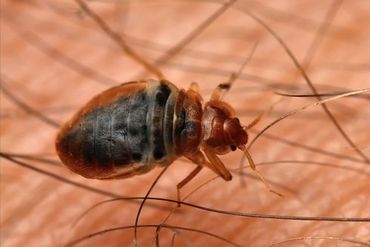
Bed bugs can go for a long period without a meal, generally months. Reports indicate that they can live for over one year.
Bed bugs can survive temperatures near refrigeration if acclimated and can survive to about 113 degrees F.
Bed bugs will feed on other animals, both warm blooded and cold blooded, to obtain blood meals.
Spilled food and sanitation are irrelevant, which is why the fanciest and cleanest places can have bed bugs. Since bed bugs feed on blood, spilled human food is not a factor.
Since bed bugs are such good hitchhikers, clutter removed for inspection and treatment can lead to spreading of the bed bug problem.
There are similar pests to bed bugs such as the swallow bug, the bat bug, the poultry bug, and the tropical bed bug. While the difference are in some cases minor, it is important to identify the pest observed. Swallow bugs have different biology and habits than bed bugs and the source will be different.
If you have infested items that are heat tolerant, such as stuffed animals, shoes, and clothing, bed bugs and their eggs can be controlled by placing them in a clothes dryer on high heat for 15 - 20 minutes.
Camel crickets are fall invaders. They enter homes and buildings in the fall but rarely live through the winter, unless they are in a very damp indoor area.
Camel crickets, also called cave crickets or humpback crickets, are about 1 inch in length and are light brown with darker banding. They have humped backs, long antennae, and long thin legs. Many people describe them as "jumping spiders," although they are not related to spiders. Camel crickets do not chirp and like dark, damp places. They are most active at night and tend to scare people, because they randomly and repeatedly jump.
Camel crickets feed on fruits, vegetables, dead insects, pet food, fabrics, paper, glue, and wallpaper.
In late summer or early fall camel crickets will begin to appear in sheds, garages, and in cool, dark, damp areas indoors. You rarely find them in upper living areas.
Outdoor Camel Cricket Sites
- sheds and garages
- animal burrows
- caves
- under stones or mulch
- in log or debris piles
- in stacked lumber or firewood
- in drainage pipes
Indoor Camel Cricket Sites
- basements or crawlspaces
- laundry or utility rooms
- in cardboard boxes stored on floor
- in stacks of newspapers, old books, other paper products
- in stored clothing or rags, especially if soiled or in dark, damp areas
- in stacked firewood
- ground floor bathrooms, especially inside shower stalls
- near stored fruits or vegetables
Spiders are generally considered to be helpful because they prey on a lot of insects, many of which are pests. All spiders have venom and use it to subdue their prey, as well as to pre-digest their prey's body contents. You may not have known that spiders do have voluntary control of how much venom they inject during any bite - sometimes not injecting any venom at all (that could be called a "defensive" bite, and usually occurs when a spider perceives it is being threatened or maybe when a leg is pinched.)
Only a few spiders which live near or inside humans' homes pose very much of a threat to bite people or cause illness or death via their venom. These may include: Widow Spiders, Brown Spiders, Sac Spiders, and Jumping Spiders. Several other spiders have been reported to occasionally bite people, including Wolf Spiders, House Spiders, Ground Spiders, Orb Weavers, and even "pet" Tarantulas. Of all spiders occurring naturally in North America, only the Widow Spiders and Brown Spiders pose a threat of serious long-term debilitation or death.
If you are having a problem with spiders near or in your house, call our trained professionals to evaluate your situation and implement an efficient strategy to eliminate these pests and help prevent their return.
The house mouse is the number one household rodent pest in all parts of the country, urban and rural areas as well. The meaning of the word "rodent" is "to gnaw," and rodents are well equipped to carry out this activity. Sharp, constantly-growing upper and lower pairs of chisel-like incisor teeth are their gnawing equipment. Mice are notorious nibblers, eating very little at one time, but they can chew what looks like a lot of materials when preparing a nest.
The house mouse can produce 8-10 litters each year, and each litter contains five to seven young mice. Within 21 days, the young are active outside the nest and within 42 days are sexually mature and ready to reproduce. This exceptionally short life cycle explains why seeing one mouse (or a sign of a mouse) suggests that several are hiding behind the scenes.
Mice aren't long-distance travelers. They stay very close to their nest if food and water are present, and contrary to what you may have heard, they eat very little, about 1/10 of an ounce a day. Their preferred menu includes seeds, grains, and generally any food materials they contact. When they do move about, it's usually under the cover of night.
You may notice signs of mice in your home during the fall when they naturally enter to escape cooler weather. You can take several precautions to prevent mice from entering your home.
1. Be sure all screens and doors fit tightly and that there are no gaps. Check the space under the door as well. A mouse needs only a 3/8-inch crack or hole to get inside.
2. Eliminate any grain materials from your storage area or house. This includes fall decorations containing wheat or corn that you may have stored.
3. Keep all garbage in tightly closed, metal cans. Also keep the cans and the area around them clean.
4. Keep shrubbery and vegetation trimmed away from the house to remove natural pathways into your home. Plants serve as shelter and food for these culprits.
5. Seal up any holes on the outside of the building that may allow mice to enter. This includes points where utility lines enter the structure such as conduits for water, electricity, air conditioning, drain pipes, and vents.
Call us today to help eliminate rodents from your home!
If you're among the millions of American's who live with pets, you should be aware that you're more likely than ever to also be living with fleas. In our area of the country, fleas can be found from March through December.
Fleas can transmit the disease organisms that cause bubonic plague, typhus, tularemia, and tape worm. They can also cause anemia in your pet, and they can bite humans.
To help defeat fleas......
Check your home and animal frequently. Pay particular attention to the pet's resting areas and carpeted area where the pet frequents.
Vacuum carpeting, baseboards, furniture and pet's bedding frequently. Seal vacuum bags and dispose of them immediately.
If fleas persist, give our pest management professionals a call!
INDOORS
Before bringing plants, grocery bags, and soft drink containers into the house, inspect for bugs that may be hiding in them.
Keep garbage pails, floors, and the kitchen clean.
If you have a pet, take up its food dish at night and wipe up any food spills.
Most pests need water. Fix leaky faucets and pipes, and keep drains unclogged.
Pay special attention to paper products and food containers that you're storing for recycling; they're particularly tempting to insects and rodents.
OUTDOORS
Store firewood outdoors, away from the house and off the ground. Shake off the logs before you bring them into the house.
Inspect your home for possible entry points. Caulk or screen areas to seal openings around windows, door frames and pipes. Fill cracks and holes in the foundation of your home.
Trim tree limbs so they don't touch or hang over the house. Trim bushes and shrubs back and away from the house so they don't become a hiding place for insects and rodents.
German cockroaches, for instance, will feast on everything from dirty garbage cans to the glue in a dresser drawer. American cockroaches, a larger variety often found in older city dwellings, love your left-overs and crumbs, but will also enjoy your book-bindings, soap, and glue. Most roaches can live for a week without water, and four weeks without food. Roaches can carry and pass along dysentery, typhus, and salmonella.
It's easy to see why cockroaches are consistently picked as the most hated and disgusting pest. However, there are things you can do to control cockroaches.
*Store food in airtight glass or plastic containers.
*Wipe up food spills immediately.
*Keep counters, floors, and cabinets clean.
*Vacuum frequently.
*Keep garbage cans tightly covered.
*Seal cracks and crevices. Caulk openings around pipes, fixtures, and cabinetry.
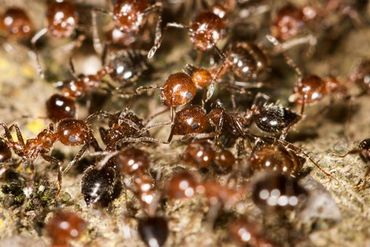
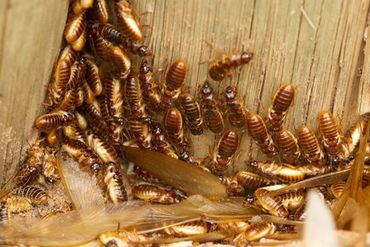
* Ants swarm througout the * Termites swarm at a very
year depending on species. limited time of the year.
* The body of the ant will * The body of the termite
vary in size depending on swarmer is about 3/8" in
the species. most species.
* Ants have four wings; two * Termites have four wings
smaller and two large of equal size.
* Ants have a pinched waist. * Termites have a straight waist.
* Ants have elbowed antennae. * Termites have straight antennae.
* Ants are good fliers. * Termites are clumsy fliers.
Kathy has been the Office Manager for The Bug Man since 2005. Kathy oversees all office procedures. When Kathy answers your call, you can be confident that you will receive polite and knowledgeable assistance.
Heidi is the Assistant Office Manager and joined The Bug Man in November of 2009. She assists Kathy with the daily procedures. Heidi is also the director of social media.
Technicians
In 1983 Terry began working for The Bug Man. Terry has been a knowledgeable, dependable, and loyal employee who has moved up the ranks to Service Manager. Terry oversees all of the technicians, handles bed bug treatments, as well as services some of his long time customers.
Keith has been a pest control technician with The Bug Man since 1996. Keith handles the majority of our termite inspection reports and has both residential and commercial customers. Keith has a great work ethic and can aide you with all of your pest control needs.
In 1997 Ed came to us with many years of pest control experience. Ed also has residential and commercial customers. His knowledge and experience helps customers get pest free and stay pest free.
Bobby has been with the company since 2009. Bobby services residential, commercial, and institutional customers. He also helps to maintain the Sentricon® Colony Elimination System as needed.
In 2011 Brooke joined our staff. She maintains the majority of the Sentricon® Colony Elimination System for our termite customers.